Regulatory Shifts Reshaping Poker Rakeback Structures in Licensed Digital Rooms
Regulatory frameworks across multiple jurisdictions have begun altering how licensed digital poker rooms calculate and distribute rakeback to players, and these adjustments stem from broader efforts to standardize bonus structures, prevent money laundering, and enforce consumer protection standards in online gaming.
Operators in Europe, North America, and Australia report that new compliance requirements have forced modifications to traditional rakeback models, which once returned fixed percentages of the rake generated from cash game pots and tournament fees, while authorities continue to monitor affiliate marketing channels that promote these offers.
Core Mechanics of Rake and Rakeback in Digital Poker
Rake represents the commission collected by a poker room on each hand or tournament entry, and rakeback functions as a loyalty mechanism that refunds a portion of that amount directly to the player based on tracked activity, yet recent directives require clearer disclosure of these percentages and caps on maximum returns per account.
Data compiled by industry analysts indicate that standard rakeback rates in many rooms previously ranged between 20 and 40 percent, though licensing conditions now tie eligibility to verified player accounts that meet anti-money laundering thresholds established by regional bodies.
Key Regulatory Developments Through 2026
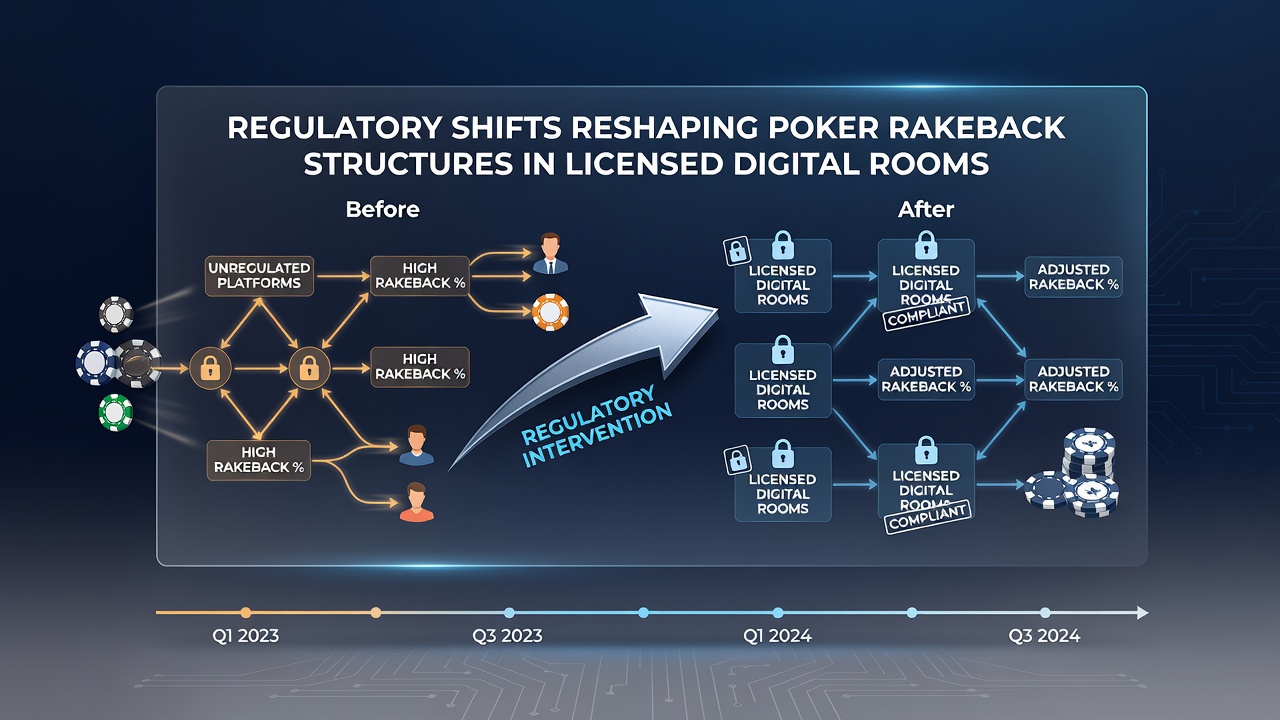
Changes implemented in several markets have targeted affiliate-driven rakeback promotions that bundled cashback with deposit bonuses, and observers note that these bundles often obscured the true cost of play for participants, leading regulators to demand separate accounting for each component.
In October 2026, updated licensing conditions in select Canadian provinces took effect, requiring operators to cap rakeback at levels that align with responsible gambling metrics tracked by the Alcohol and Gaming Commission of Ontario, while similar adjustments appeared in Australian state frameworks that reference reports from the Australian Communications and Media Authority on digital gaming transparency.
European operators have adjusted programs to comply with evolving interpretations of the EU's digital services rules, which emphasize verifiable player data and prohibit automatic enrollment in loyalty schemes without explicit consent.
Regional Variations in Compliance Requirements
Licensed rooms operating under Malta Gaming Authority oversight have introduced tiered rakeback systems that scale rewards according to verified play volume and duration, and these tiers replace flat-rate offers that previously applied uniformly across all account holders.
Operators in New Jersey and Pennsylvania have aligned their structures with guidance from the Division of Gaming Enforcement, which mandates that rakeback calculations exclude certain promotional rake portions to prevent double-counting of incentives already returned through other channels.
Research from academic sources, including analyses published by the University of Nevada's gaming studies program, shows that rooms adapting early to these rules experienced measurable shifts in player retention patterns during the transition period.
Operational Adjustments by Licensed Operators
Digital poker platforms responded by redesigning their tracking software to isolate rake generated from standard play versus promotional events, and this separation allows accurate reporting to regulators while maintaining player-facing dashboards that display remaining rakeback eligibility in real time.
Some rooms introduced loyalty point conversions that replace direct cashback, and these points carry expiration dates or usage restrictions that satisfy requirements for time-bound incentives under new licensing terms.
Effects on Player Behavior and Room Economics
Figures released by the European Gaming and Betting Association reveal that rooms with revised rakeback policies recorded stable or slightly increased average session lengths among verified accounts, although overall affiliate referral volumes declined in markets where disclosure rules limited promotional language.
Players who previously maximized returns through multi-room rakeback strategies now encounter stricter single-account verification processes that link activity across sites operated by the same parent company, and this linkage reduces opportunities for overlapping claims.
Conclusion
Regulatory shifts continue to influence rakeback structures in licensed digital poker rooms as authorities enforce consistent standards for transparency and consumer safeguards, and operators maintain compliance through updated software, revised terms, and region-specific caps that reflect local licensing conditions as of late 2026.